Frank's Own Papers
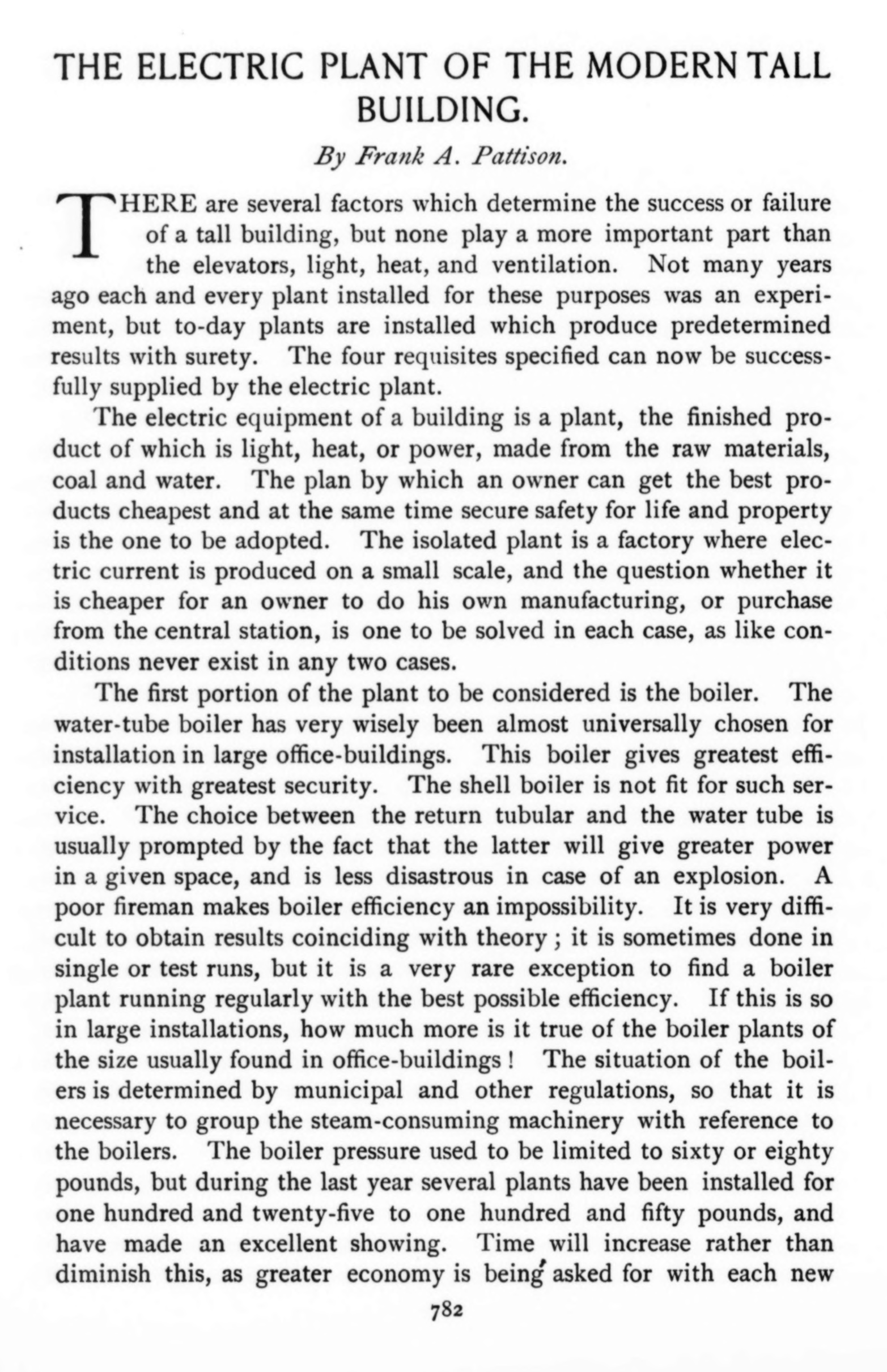
The Engineering Magazine / 1897-08
Frank reads the building
This is the best doorway into Frank's mind. He is not merely wiring rooms; he is making a tall building behave as one ordered plant.
It carries Frank's engineering philosophy. It does not carry every later skyscraper remembered in the family.
The 900-building statement Who's Who in Engineering / 1922
The 900-building statement
This lets the family feel the scale without pretending every building has yet been gathered by name.
It does not itemize nine hundred buildings. The itemized work remains in the project ledgers.
Charles In The Working Record
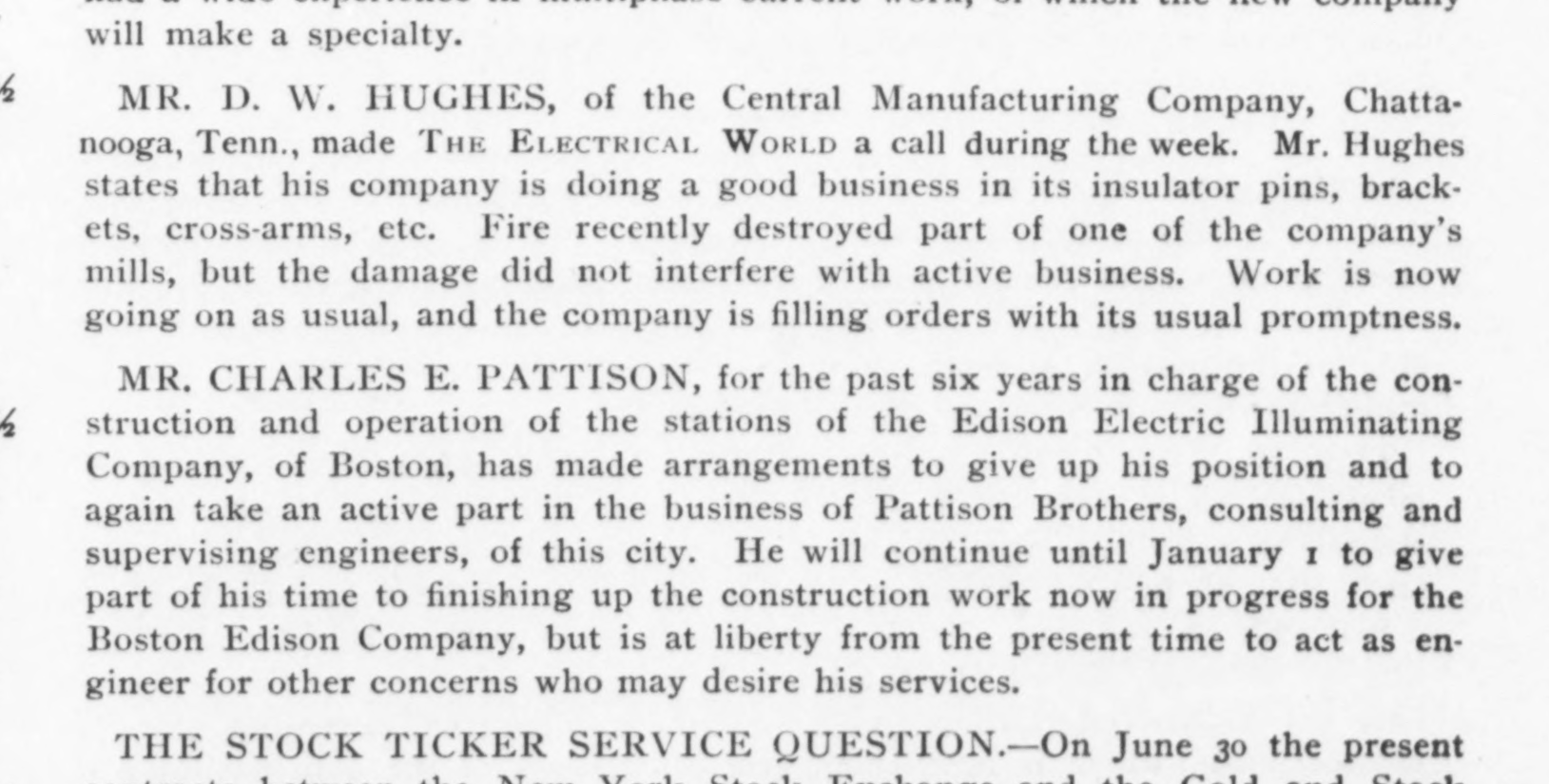
Electrical World / June 5, 1897
Charles returns
Charles can disappear behind Frank's public writing. This paper restores his practical weight.
It is a trade note, not Charles's memoir. It should stand with his storage-battery papers and Edison Pioneer record.
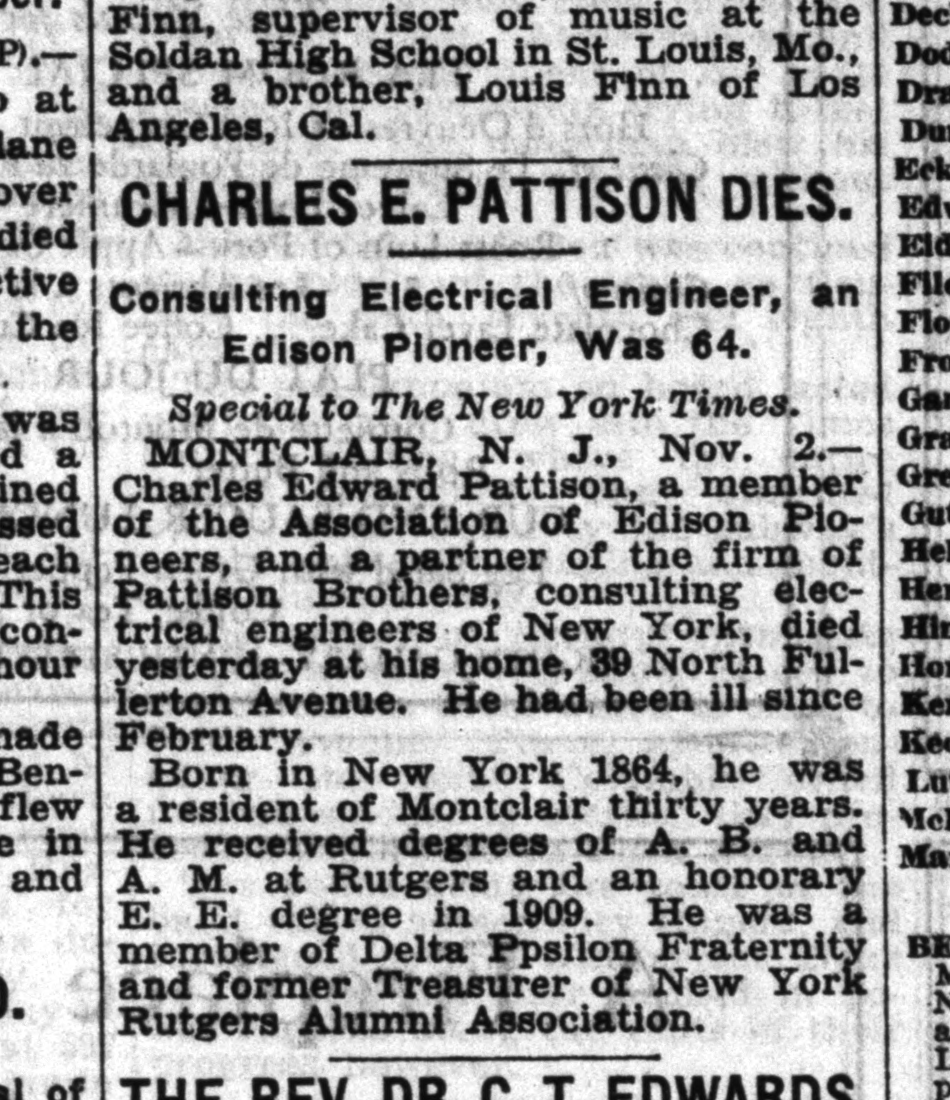
The New York Times / November 3, 1928
Charles remembered
It is a sober end-point for Charles, and it keeps his Edison identity attached to his name.
It is an obituary. It should stand beside contemporary career papers for the fuller engineering record.
Mary's Books And Memory
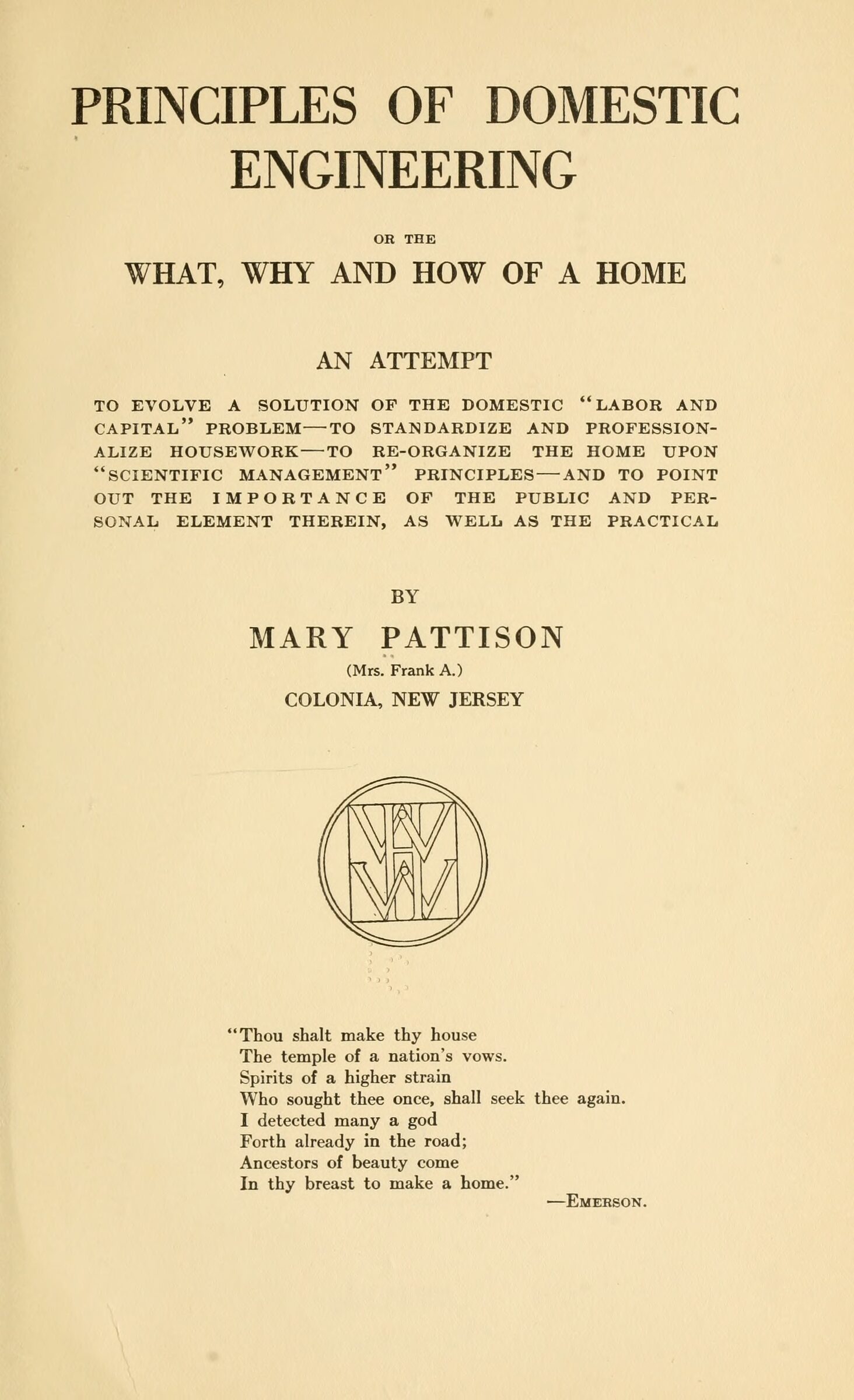
Principles of Domestic Engineering / 1915
Mary's public voice
This lets the family meet Mary as an author before asking her to carry family memory.
It does not carry Frank's projects. It gives the household context and Mary as a thinker.
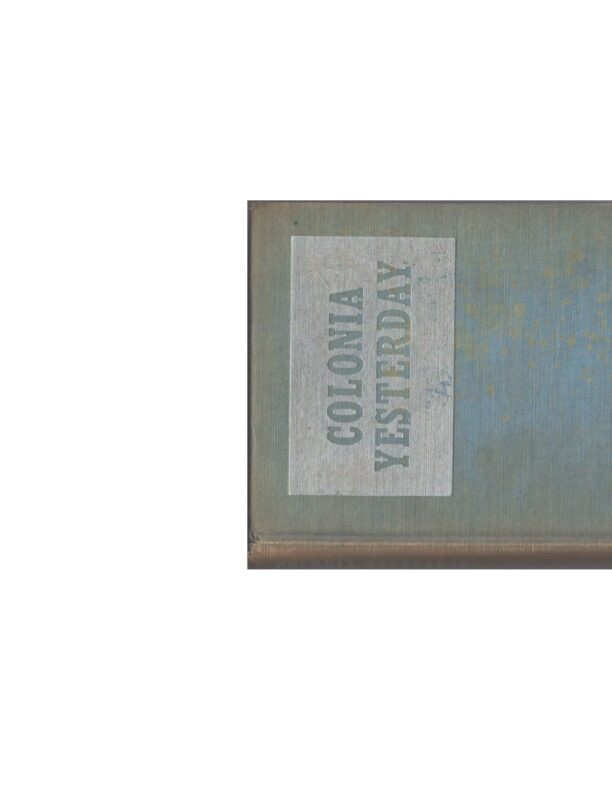
Colonia Yesterday / 1949
Mary's later memory
This is the family voice many readers will want most. It is made readable here while its limits remain plain.
Some memories are corroborated, some remain leads, and the New Theatre revolving-stage memory is corrected by contemporary paper.
The Office In Print And Letter
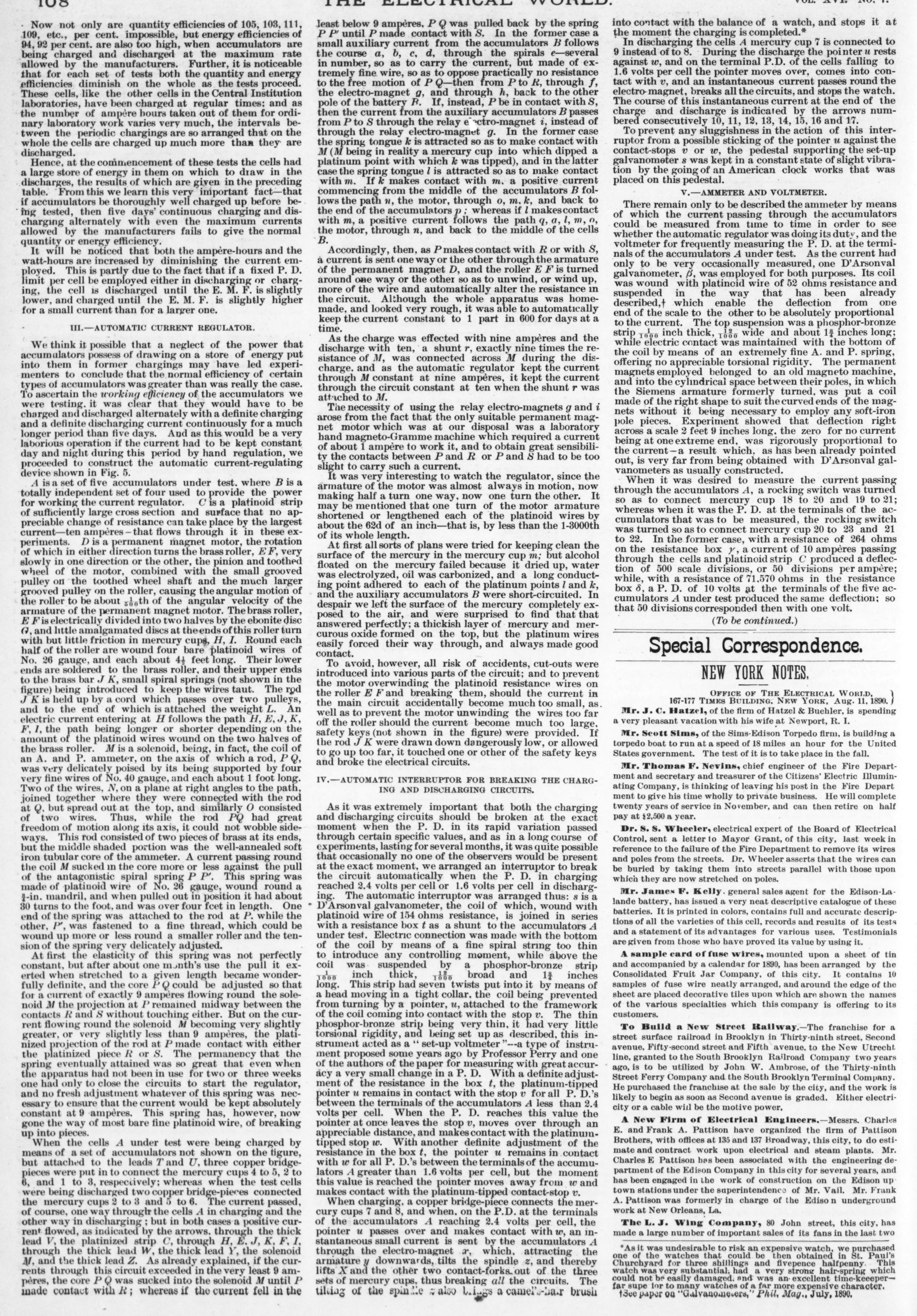
Electrical World / August 16, 1890
The firm begins
For the family, this is a beginning in public print. It gives memory a date, a place, and two brothers standing under one name.
It carries formation and intended scope. It does not carry a completed client job.
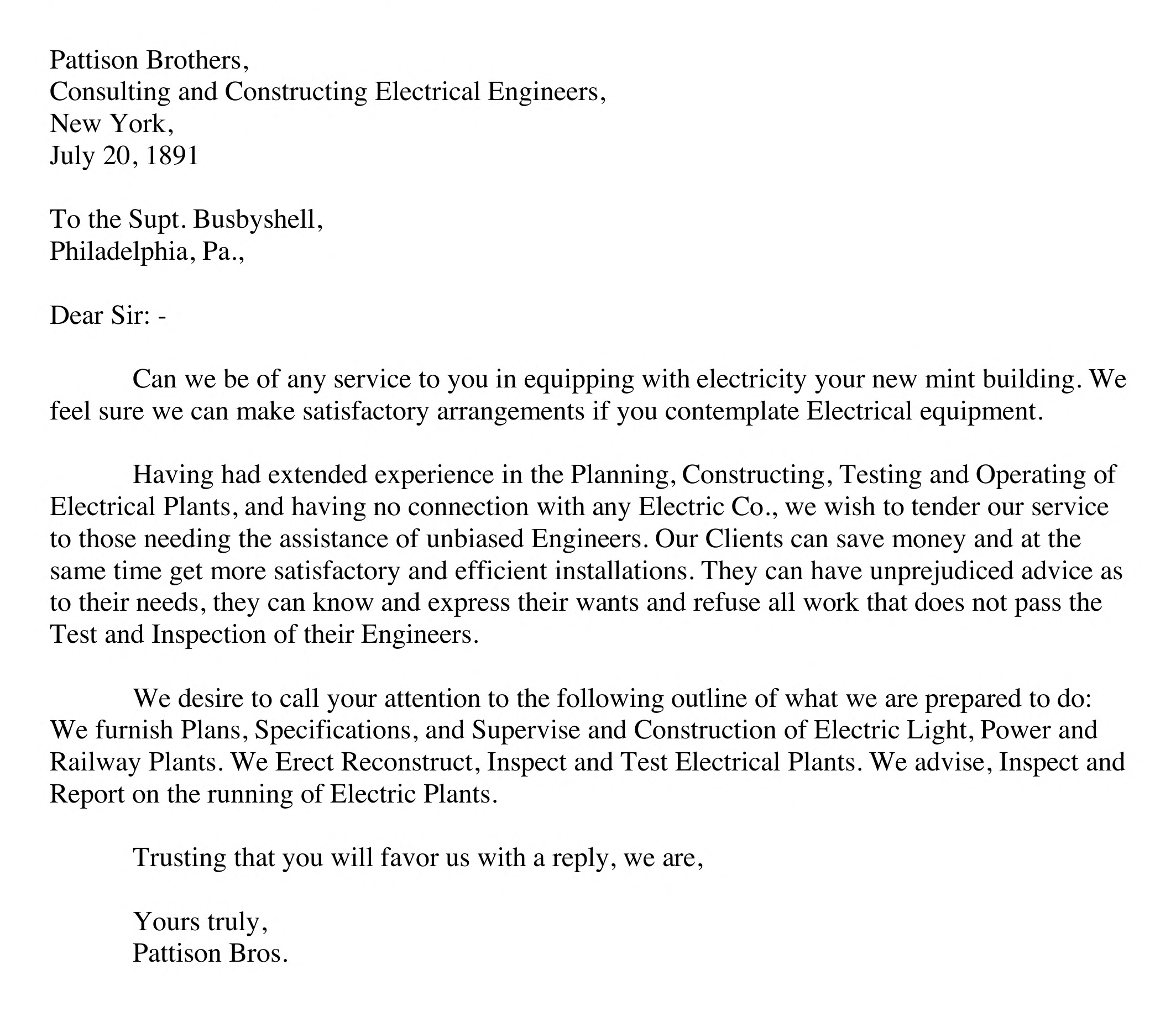
Pattison Brothers letterhead / July 20, 1891
The firm in its own voice
This is not a later description of the brothers. It is the office saying what work it could undertake.
It carries a solicitation and service model. It does not carry proof that the Mint gave them the work.
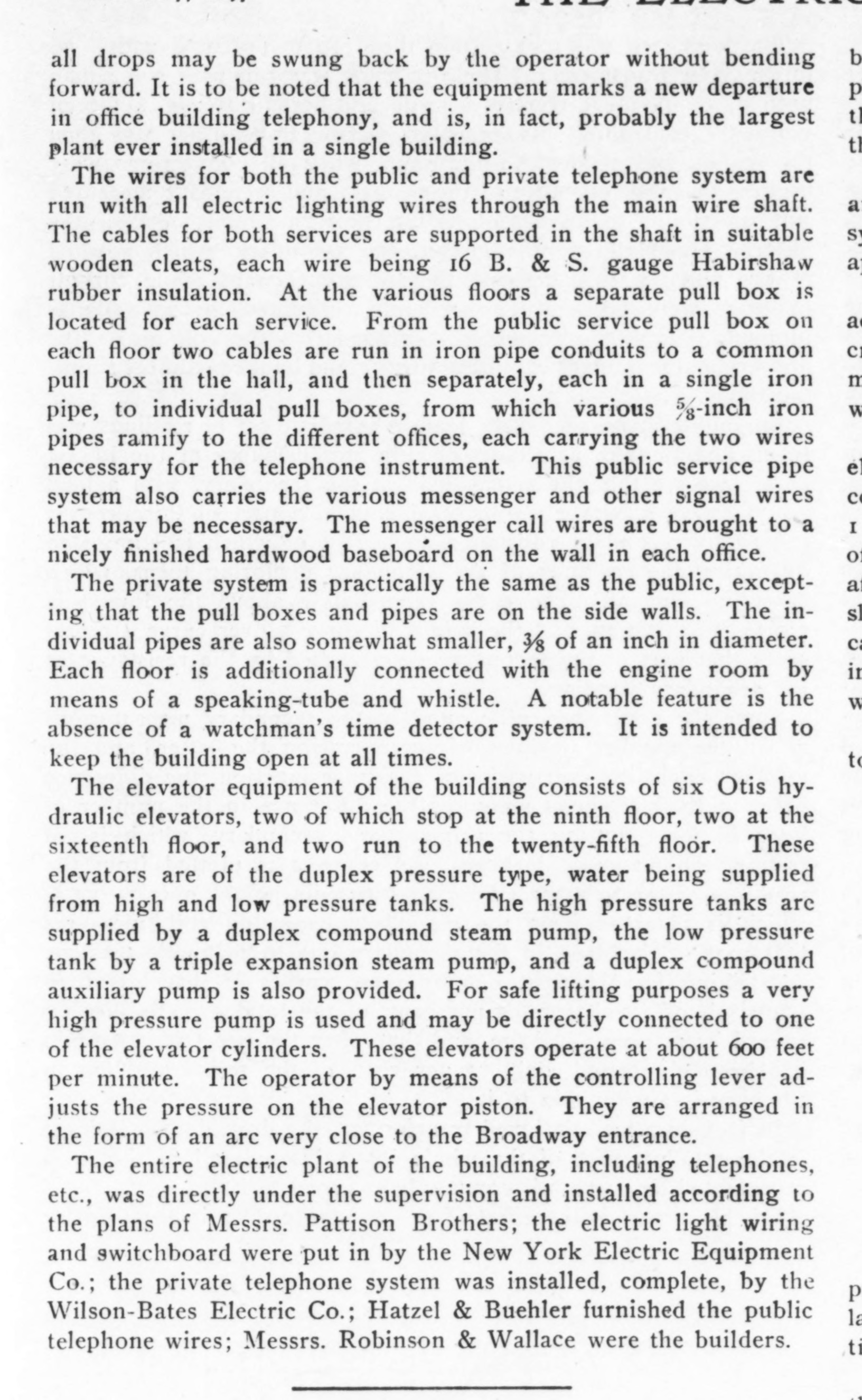
Electrical World / March 27, 1897
A skyscraper proof
It is the kind of concrete paper a family can hold: a building name and a description of what the office did.
It carries the electric and telephone plant role, not ownership or every mechanical system.
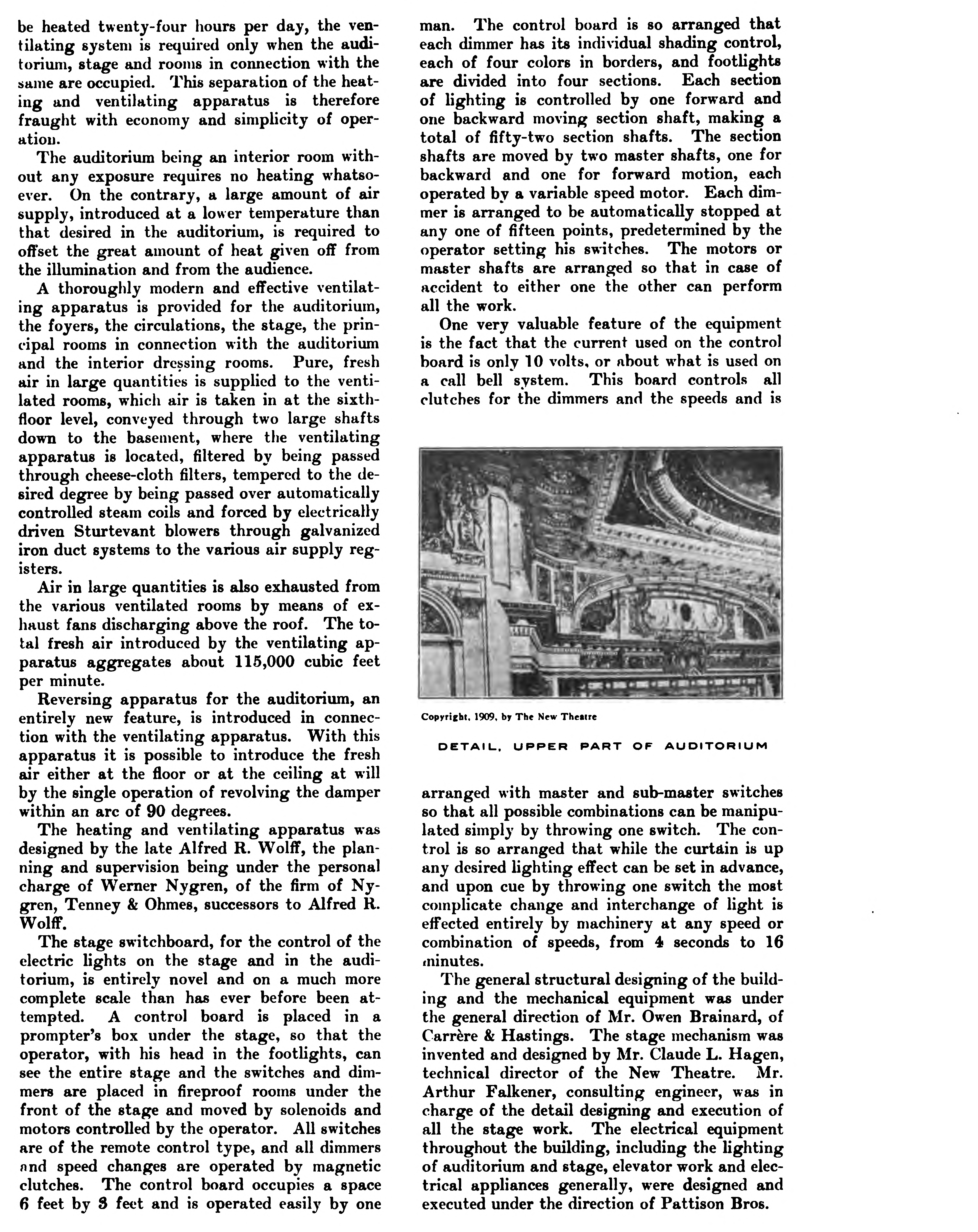
The Architect / 1909
A truthful correction
The correction strengthens the family story. It shows that affection for memory need not require false credit.
It corrects the family-memory version that Frank or Pattison Brothers engineered the revolving stage mechanism itself.

Heating, Piping and Air Conditioning Engineering / 1934-12
The firm after Charles
It keeps Frank's final working years from becoming a blank space.
It is an advertisement and equipment context, not a complete construction file.
The Press As Witness
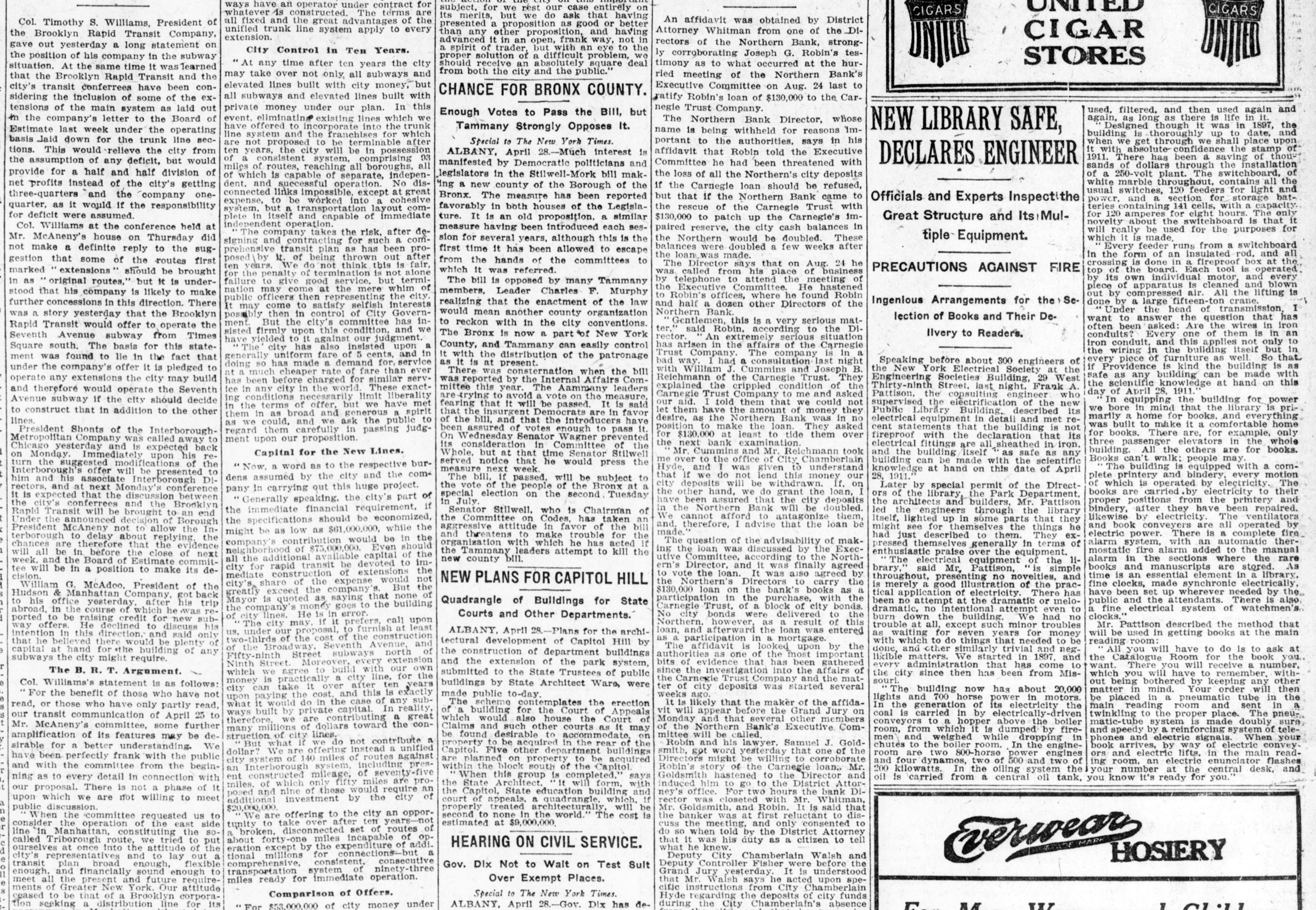
The New York Times / April 29, 1911
Frank at the library
This is a vivid family scene preserved by the press: Frank explaining a landmark at night, then walking engineers through it.
It is newspaper witness. The broader Public Library scope should still be paired with trade and library papers.
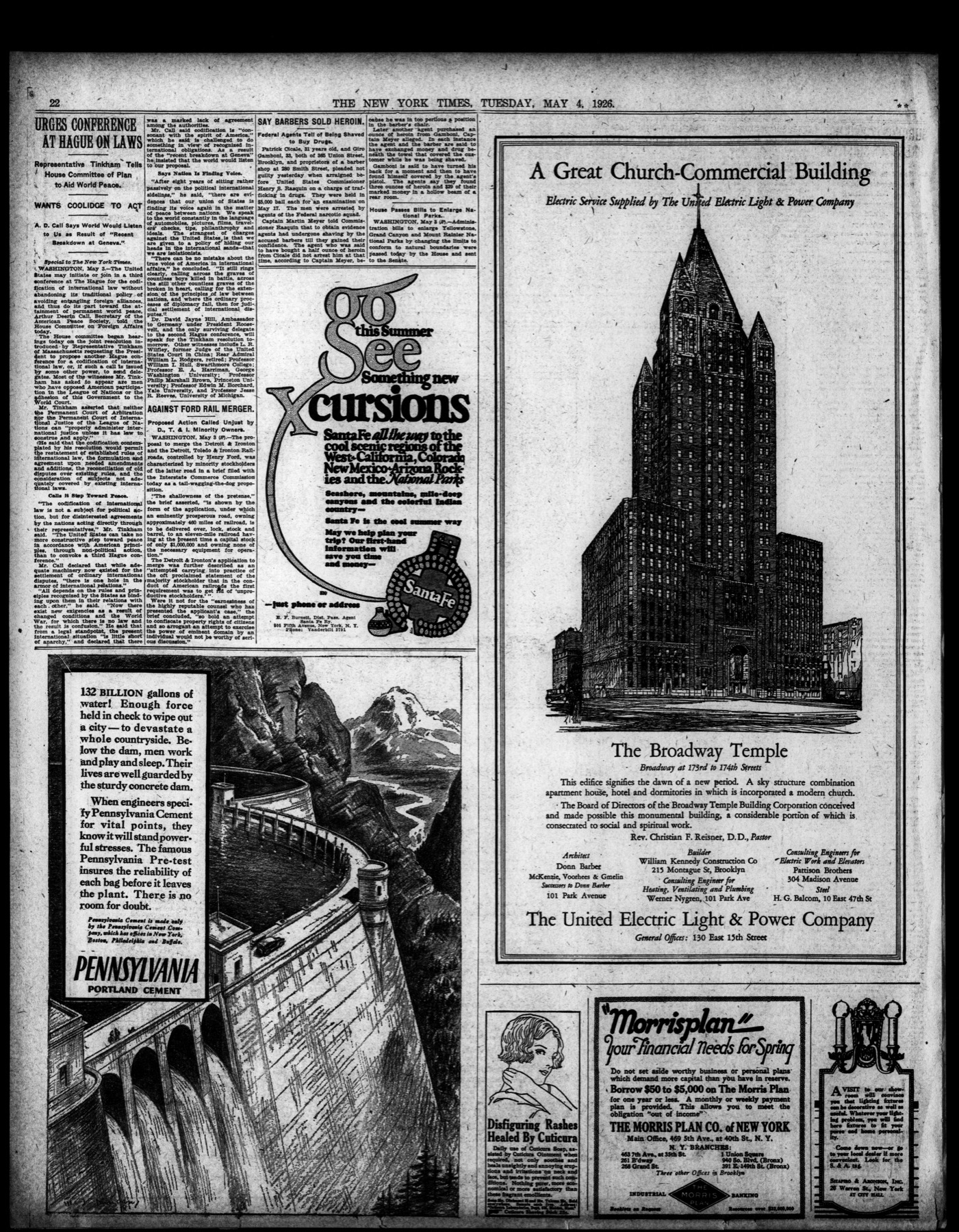
The New York Times / May 4, 1926
Still working in 1926
It helps us understand that Pattison Brothers was not only an eighteen-nineties story.
It is a display advertisement, not a contract file or technical specification.